
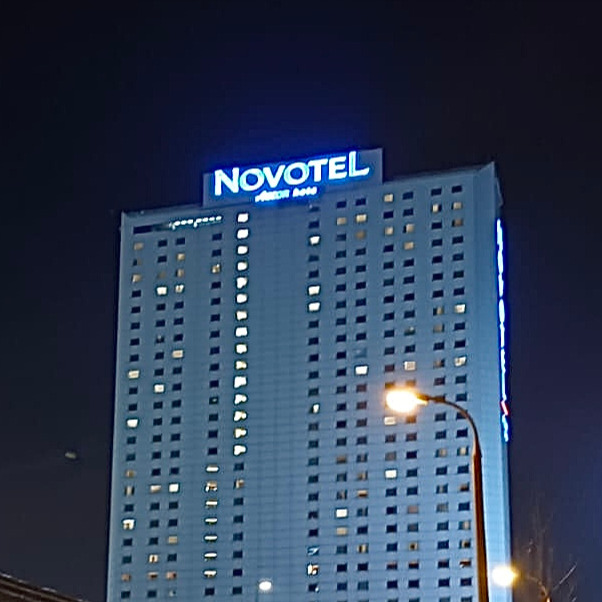
Novotel. The Free Breakfast Isn’t Free.
14 September 2026My family and I have stayed in quite a few Novotel hotels over the years, especially when my daughters were younger.
Partly because they’re convenient. Partly because when you’re travelling with children you don’t necessarily want to turn every overnight stop into an experience. You just want something that understands you’re travelling with a family.
Which Novotel does: the children stay for free and they eat breakfast for free. There might even be a little something waiting for them when they arrive. My daughters, for example, made excellent use of the game screens they had in the lobby.
None of it feels particularly extravagant. But it makes a difference.
And I’ve often wondered how much those little extras actually cost Novotel.
Because I’m fairly sure they’re not really free.
The interesting thing about Novotel’s approach is that these extras are part of the proposition. Families aren’t an afterthought; the experience has been deliberately built around them.
And that distinction matters.
There is a particular kind of generosity that businesses can be very good at. A customer asks for something and you throw it in. You do a little extra work. Or you waive a charge.
Nobody minds. In fact, everybody feels good about it. The customer gets more than they expected and you feel like you’ve delivered great service.
But a problem arises if nobody stops to work out what the generosity costs. It could be the time it takes someone to arrange it, or the opportunity cost of the work you could have done instead.
And if you do it often enough, the small extra can become a significant part of how your business operates. Without ever becoming a significant part of how the business prices what it does.
Which is why Novotel is interesting.
Its family offer isn’t really about giving things away. It is about designing an experience that families value.
The children staying and eating breakfast for free is one part of that. Family rooms are another. The little touches that make travelling with children easier.
Together, they say something quite important: “We understand what it is like to travel as a family”.
And that’s what the customer is actually buying.
The difference is between generosity that is designed and generosity that is accidental.
It’s not that generosity is inherently bad for a business. Sometimes it is exactly what creates value.
The problem arises when we mistake something that feels small or free to the customer for something that costs us nothing.
It does.
The customer doesn’t need to know what the champagne cost. Or the chocolates. Or how many minutes of someone’s time went into arranging the surprise.
But you should.
The answer to over-delivering isn’t to stop giving customers more. It’s to understand why you’re giving it to them.
Novotel isn’t successful with families because a child’s breakfast costs nothing. It is successful because the family feels that the hotel has thought about them.
Generosity has a purpose. Generosity is valuable.
It just isn’t free.
